Showing posts with label medical care. Show all posts

Thursday, October 12, 2017

The Importance of Learning About Your Health

Can you answer these three questions from the Brief Health Literacy Screen (BHLS): 
  1. How confident are you in filling out medical forms on your own?; 
  2. How often do you have someone help you read hospital materials?;
  3. How often do you have problems learning about your medical condition because of difficulty understanding written information?
They appear simple. Many people I think would say Very, Never, and Never. But then if you add in the complication of not knowing English very well, a lower level of education, or just being sick and not clear headed at the time, those could change easily to: Not at all, Often, and Frequently.

What is the result of this kind of problem? Longer hospital stays for one:

"Using the BHLS screen, 20% (1104/5540) had inadequate health literacy. Patients with low health literacy had an 11% longer average length of stay (6.0 vs 5.4 days). Among men, low health literacy was associated with a 17.8% longer length of stay, and among women, low health literacy was associated with a 7.7% longer length of stay."

Longer hospital stays result in more exposure to germs, bigger bills, less rest for the patient (who ever gets a good night's sleep in a hospital) which ends up with more patient stress.

A recent study showed all this and more. Read it here.

Thursday, October 20, 2016

An App for Lymphedema Self Care

I am on the fence on this one. At NYU, a bunch of really smart people have developed a prototype of an app for self-care for lymphedema. They have tried it on about 20 people. They realize that they used their app on patients who are highly educated and tech savvy. A great idea. Right?

Not. They realize their audience is skewed in one direction. But I think I could be put in that group myself of well educated and tech savvy but I am not going to jump on my phone or laptop at every twinge. Not happening.

I think I blogged about the idea of 'cool' apps for anyone over 30. Not so great. I like the idea of helping with self-care for patients but not necessarily an app. I think we need a new idea for this. The internet and technology do not solve everything.

Saturday, April 26, 2014

Quick access to medical care

Do you see the nurse or the doctor (or the physician's assistant)? Back in the good old days, you went to the doctor and saw the doctor. A nurse might come in and take your vitals, bandage something up, or some other task that was below the doctor's capabilities. They were doctors and didn't do the basic stuff that would take away from their schedule.

Now you may see the doctor, the nurse, the nurse practitioner, or a physician's assistant or even someone else.... Does it make a difference? Not really. They all give out prescriptions, send you for tests, and diagnose and treat you. They all talk to each other if there are any questions.

Back when I was young and athletic in the 80's and 90's, I used to go skiing with Club Med in Colorado (an awesome vacation every year for seven years). One year, I was put in a group of skiers which included several doctors, a nurse, a few others, and me. It snowed overnight so we went skiing in the back bowls to enjoy the fresh powder. This entailed a hike up over a ridge in loose snow at about 14,000 feet (gasping for breath), over the head wall singly, and reconnect as a group with the instructor last to clean up any debris (skis, poles, hats, gloves, etc) to ski down for a mile or two, take another lift back up to ski down the front side of the mountain.

All went as planned. Each of us went over the head wall and into the loose powder (and you say 'why is she telling this story' - be quiet there is a point here) and across the flats. Last came the instructor, schussing across the flats, until his ski hit a rock just under a thin layer of powder where the wind had blown off the other foot or so of snow. He did your basic rolling fall with equipment going everywhere (similarly to 'the agony of defeat'). We started back to help pick up everything and give him a lot of sass for it.

All jokes ended when we saw the blood pouring out of his face. In a rather inaccessible place in the mountains, he caught a ski pole in his face and ended up with an 'Al Pacino Scarface' injury. The doctors stood and gaped and said they hadn't seen anything like that since internship. The nurse ran to his side and started yelling for clean tissues, napkins, bandanas, anything to apply pressure and stop the bleeding. The nurse knew what to do. She fixed him up and rode the chairlift back up with him and went with him to the clinic where he got five stitches in his face. The doctors went to lunch.

So on that sunny day on a ski slope on the backside of a mountain in Colorado, the nurse was the winner.

Now when I go to see my PCP or oncologist, I often see a nurse practitioner. When I see my pain doctor, sometimes I see his physician's assistant. Its not that big a deal. Particularly with my PCP, if I have a new ailment and need a visit as soon as possible, I'll get one of the nurse practitioners. I could wait a week before seeing my PCP or see the nurse practitioner. I'm happy with the sooner visit.

Think of this as well. Do you remember going to the dentist and the dentist cleaned your teeth? Now a hygienist cleans your teeth and a dentist does fillings and other nasty things with drills and pointy things. When I go to the eye doctor a technician checks my vision and glasses prescription and the ophthalmologist checks my corneas.

All this is for quicker medical care and more use of specialized training in different parts of the medical world. I'm all for it - I want the quicker access to medical care.

Tuesday, August 27, 2013

So are you an inpatient or an outpatient?

The hospital and Medicare get to decide. Not your doctor who is actually treating you.

I found this pretty appalling. Medicare patients can be in the hospital for DAYS and be called and an outpatient because they are only being 'observed'. They get the same care as everyone else. But then they get a big fat bill if they were an outpatient.

Their doctor can even admit them and make them an inpatient but then the hospital can change it back to outpatient. Hospitals like this because they get reimbursed more that way.

"Medicare originally intended observation care as a way to give doctors time to evaluate whether a patient should be admitted to the hospital or is stable enough to go home, usually within 24 to 48 hours. But hospitals are increasingly keeping patients in observation status longer: 8 percent of Medicare recipients had observation stays longer than 48 hours in 2011, up from 3 percent in 2006.
Apparently the government can tell by looking at a rule book to figure out how sick you are, not but diagnosing you and reading your chart. Or, God forbid, even talking to you.

That increase may partly be a response to aggressive reviews of hospital billing practices in recent years. Medicare contractors have demanded refunds from hospitals that admit patients the government believes should have been treated as observation patients or outpatients. Medicare pays hospitals less for those patients."

And also hospitals are now rated on their readmission rates. If you aren't admitted the first time, you are not readmitted later on.

"Toby Edelman, senior policy attorney at the Center for Medicare Advocacy in Washington, D.C., said she believes hospitals also could be trying to avoid readmission penalties, which are assessed if too many patients are readmitted within 30 days. Harold Engler, for example, went home after five days, grew sicker, and then returned for another five-day observation stay. If he had been an inpatient, he would have counted as a readmission within 30 days."

Hospitals claim they are working on it because they computer tells them what to do. The computer even knows more than the government:

"Dr. James Hart, who heads a Beth Israel Deaconess committee that makes sure the hospital follows Medicare rules, said he could not comment on Engler’s case. But he said the hospital uses a sophisticated computer program that tries to match patients with the correct Medicare designation based on their illness and the intensity of hospital services required. “We are very focused on getting the level of care accurate,’’ he said."

Medicare knows this is a problem and even has created a brochure on this telling patients the difference. But if you are sick in bed, do you really care about semantics? No.

"Case managers generally inform patients of their status, especially if they require skilled nursing care, he said. But that doesn’t mean patients digest the information, at a time when they have so much to focus on. “Part of the challenge from a patient perspective is there really is an information overload,’’ Hart said."


You just want to feel better and go home where you can be in your own bed eating real food instead of the crappy hospital food they serve.

I knew Medicare had its issues but I didn't think it was out to impoverish seniors. I thought it was supposed to be the other way around. Clearly some changes need to be made here.

Update: 8/30/13 - One of the former heads of Medicare wants the rule on observation to be abolished.

Sunday, December 30, 2012

Good bye 2012, Hello 2013 health care-wise

So if you read CNN, which I do. I find it much easier than watching CNN - either HLN screaming about new 'factoids' and miracles, or regular CNN going on and on and on about something boring and political that will put me to sleep before I learn anything. I prefer my news in the low brow way - tell it like it is and keep it short. This is why I like CNN online - because I can skip through articles instead of listening to people S L O W L Y reading them. I don't have a lot of time in my life to waste on the news. I have better things to do - like have fun.

I have digressed. CNN put out their list of the top health news stories of 2012 - which I found to be exceptionally lame as several of them focus on individual people. Here's the list:
  1. Supreme Court upheld the Affordable Care Act.
  2. Woman from Georgia and her case of flesh eating bacteria
  3. Meningitis from steroid injections that killed 39
  4. The Record West Nile Virus outbreak
  5. Robin Roberts bone marrow transplant
  6. Hantavirus at Yosemite
  7. Jesse Jackson and bi-polar disorders
  8. Spike in autism cases
  9. Kathy Bates double mastectomy
  10. Hepatitis C from the traveling hospital worker
 I personally think numbers 2, 5, 7, and 9 are not significant as they are mostly about individuals and do not represent any breakthroughs. Nothing against the individuals but they do not reflect any real news.

But here is the list for 2013 of things to look out for:
  1. Medicaid expansion
  2. Medicaid provider payments will go up so more providers will take medicaid patients
  3. Health insurance exchanges
  4. Medicaid taxes are going up for those making over $250,000
  5. Medicare reform
  6. Insurance transparency - health insurance policies will need to be understandable
  7. Health care spending will be a big issue
Maybe this is what I get for reading CNN but I would prefer to see stories about health care advances and research. Maybe I need to do more research. But I do like the changes for the coming year with healthcare.

Tuesday, September 4, 2012

When medical standards change and they don't tell the patients

Back when I had thyroid cancer in 1981, I was followed by an endocrinologist for more than a decade. Then my endo retired and I switched to a general internal medicine doctor for a primary care doctor. Some where during that time, standards for follow up to thyroid cancer patients changed. Ultrasounds become the standard for following up on potential residual tissue or recurrence and were ordered by endocrinologist. I just went along my merry way with out an endocrinologist not knowing that I should have one.

In 2008 I went to the Thyroid Cancer Survivor's Conference in Boston and found out that I had clearly missed something and should have an endo. Then I started seeing an endo twice a year for blood work and regular ultrasounds and am back on the program.

I had felt somewhere I should have been told that the standards are changed and endocrinologists follow thyroid cancer patients for life. There is no real way patients have for learning about changing standards in care over time. We assume our doctors will tell us.

My previous primary care never was a good communicator and I have switched from her to a new doctor. She really was a communication failure and I rarely saw her, mostly her nurse practitioner, which is why she is no longer my PCP. If this change happened sometime after the early 1990s she should have told me at some point.

I have now learned to be more proactive about asking about changes in treatment. I think my new primary care also does a better job of telling me about changes in standards so I feel more comfortable about it. And I can always hop on to Dr. Google and see what he tells me so I can ask about them.

Saturday, August 18, 2012

Law, religion, and medical care

This story saddened me. A 16 year old girl who was 13 weeks pregnant died from complications from leukemia in the Dominican Republic. The Dominican Republic constitution forbids abortion which I believe is within their rights to decide as a country. This is probably due to the main religion of the country - Catholicism. Her doctors were concerned that chemotherapy would induce an abortion. It took 20 days to reach the decision that she could receive chemotherapy. At that point she miscarried, had a cardiac arrest and could not be revived.

While I am certainly not going to get into a discussion on the Catholic church's opinion of abortion or the Dominican Republic's Constitution, nor discuss the subject of teen pregnancy, I do feel that the purpose of the Hippocratic Oath was to do no harm. To me this means taking care of the patient first. Where was the sense of urgency in making this decision to let her receive chemotherapy? Why wasn't the concern for the life of the mother taken into consideration?

It is just very sad that politics and religion interfere needlessly with medical care in this day and age.

Tuesday, April 24, 2012

Tiered health insurance options

We have heard about the options in tiered health insurance. This is where the insurer negotiates rates with different medical facilities and then charges the patient differently based on where they go. That generic drugs are cheaper than brand name ones, etc. are another side of this.

I have always thought this was a good idea. I think patients have a tendency to either go for medical care to wherever their doctors send them or where they have always gone. Patients are human beings who are essentially lazy and take the path of least resistance. But what if the insurance company started charging them more for where they have always gone? I never thought about that part.

Yesterday as I was rushing to go to work on a rainy Monday, I went back first for my hair brush and second to see if I left the stove on (otherwise I would have had a bad hair day and driven myself crazy all day thinking I was burning down the house with the cat in it), I was also listening to the radio. They had a commercial on for some big health insurance plan where the CEO or some big-wig was on talking about the how's and why's of tiered health care.

I know I go to a relatively 'expensive' hospital but it is the closest one without going into the traffic filled city of Boston. Then the horrifying thought occurred to me - what if they started charging me more to go where my 30+ years of medical records reside? 'Surely they can't mean me' are the blinders we live by when these changes are announced. If this happens, I will have to become a rebel and protest this.

I understand the principle behind this steer patients to the less expensive medical facilities. This may also get them to use the smaller community facilities instead of the fancy (expensive) ones but there also should be some logic applied to this formula. Somewhere in the equation should be the consideration for the patient who doesn't want to go geographically far away for treatment when it good treatment is located near by. (This integration intentioned busing applied to medical care - send the patients to far away places because they want to keep things 'even'.)  It sounds good in theory but isn't with the patient's best interests in mind. Hmmm.... must be the insurance companies in charge again.

Wednesday, February 29, 2012

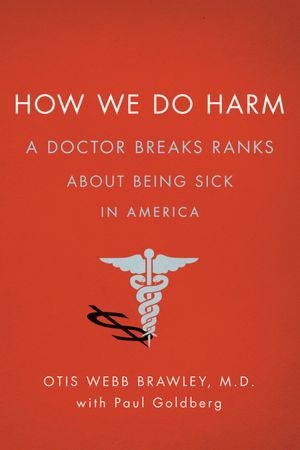
What happened to 'do no harm'?


This book sounds like it will give a pretty scary overview of medical treatment in the US. I will have to add it to the stack of intellectual books I am attempting to read 'The Emperor of All Maladies' and 'The Omnivores Dilemma' and others. But I really will read them all some day. 

Anyway back to the book, How We Do Harm: A Doctor Breaks Ranks About Being Sick in America. The title says it all. One example in the article talks about a woman who was treated with the standard of care for breast cancer in the early 1990s. Her treatment nearly killed her and she was hospitalized for nearly a year. And that was the standard of care. Her doctors probably knew about the side effects and yet prescribed it for her just as they probably did for many patients. After wards it was learned in clinical trials that the treatment probably did not good and may have done harm to her as well.

Medical practice in the US has a range of participants:
  • FDA who approves treatments, medications, etc.
  • Insurance companies who pay for these
  • Patients who want the best available treatment
  • Doctors who prescribe the treatments 
Then we add to the mix the availability of equal care to all and the patients who are willing to sue their insurance companies to get a new treatment covered. As you are aware I am not a fan of insurance companies but I find it silly for patients to sue for coverage of a treatment which is not FDA approved. I see this as interference in the medical system. (Yes, there really is a medical system in the US.) I am all for arguing with my insurance company (which I need to do this morning but that's another story) but I don't think I would sue them. Nor do I think I would want a treatment which is not FDA approved.
I am starting to digress here. Back to the subject of the book. It sounds pretty scary. I want my treatment to be FDA approved and I want it to be safe and effective. I do not want to be over treated and nor do I want to be under treated through unsafe medical treatments. I want my doctor to have my best interests at heart. 

Where I am treated, the hospital has set some relatively conservative protocols which give their doctors some leeway in treatment but provides a relatively high standard of care. I am comfortable with this. I do not want to be a guinea pig, I want to be healthy. I trust them. I don't want to end up in the next edition of this book.

Tuesday, February 7, 2012

Statistics dont tell the whole story

I have been very happy and comfortable with the quality of my health care. I live near Boston the home of many world class hospitals and the quality of care available in the area is very good. Or so I thought. HealthGrades.com just released their latest list of top cities for health care. So I wanted to see where Boston was on the list. Its not. Neither is New York City.

I was surprised to say the least.Then I started thinking - a very dangerous proposition at times. This is a classic example of how statistics can be misleading. These numbers are looking at the level of care across an entire metropolitan area. While this includes the leading hospitals, it also includes small and large medical centers that may be underfunded or serving a sicker population who are going to have statistically worse than expected outcomes due to their overall health.

So I went through and looked up where I am treated and feel slightly better. Then just for the hell of it I looked up Dana Farber. They have all sorts of physicians listed, many of them have no ratings. And they had no surgical procedures listed. Hmmm.... So what is their rating? I don't know.

More advice on statistics. Ignore them.

Sunday, December 25, 2011

Holiday thoughts

Today as Christmas, unless you somehow missed it and haven't heard about it, and many people celebrate it but not all. Recently a friend was blogging about how Christmas for her is different - she's Jewish and its her birthday. She doesn't get to celebrate her birthday on her birthday with her non-Jewish friends. The goyim are all doing Christian things like going to church and opening gifts. Other people have their own holidays to celebrate - Hanukkah, Kwanzaa, Festivus, or other holidays at different that occur at different times in the year.

Whatever the holiday there are always are a few consistencies. Families who celebrate it get together and do their thing - usually eat, sometimes gifts or religious services too. Families who do not celebrate do their usual thing. Some holidays require businesses to be closed by law. Some holidays allow businesses to be open. Usually there are some kinds of restaurants open for non-holiday celebrants as well.

But there is one thing we should never forget there are some people who do not get holidays - think about it what is always working 24/7: public safety, military, medical professionals, emergency management people - do you think the guy at the nuclear power plant who is in charge of making sure there aren't leaks ever gets time off? Isn't someone supervising the internet somewhere to make sure a server doesn't crash - and tell me with all the servers in the world one of them is bound to crash every day.

On a holiday, I am sure all these professions allow for some juggling - well maybe not the military - to let people spend time with their families or allow them to trade off each year. But there is always someone there. If you are hospitalized, you don't get a day off to go home for a holiday meal - if you could they would send you away. If you are in a car accident or something, you don't have to wait until tomorrow to get fixed up in an emergency room - and the firemen, police officers, and EMS are all there to take care of you.

This past Friday, December 23, I had a doctor appointment at 3:10 pm. When I scheduled it I didn't think much of the timing of it but when I arrived at the hospital, it was clear it was a very slow time. The parking garage had several primo spots available. The waiting rooms were mostly empty. I was one of three people sitting in a waiting room which usually has a constant flow of patients and staffers in and out was very quiet. My doctor was running late and I didn't leave until well after 4pm. I had to stop by admitting where there was a single, young woman working. Even though it was a quiet time, everyone I saw was cheerful, pleasant, caring, and happy to do their job. They weren't complaining that they were some of the last employees in the hospital right before a holiday.

I saw this article earlier last week reminding us to thank all our nurses on Christmas for their care. I think there is a lot more than that. We need to thank all of those people who take care of us and make sure we are safe and healthy at all times. Holidays should be for everybody but we couldn't survive them without some help.

PS Happy birthday, Judy!

I Started a New Blog

I started this blog when I was diagnosed with breast cancer in 2007. Blogging really helped me cope with my cancer and its treatment. Howe...