Showing posts with label progress. Show all posts

Tuesday, March 6, 2018

Hidden Scars from Breast Cancer

Yes there are lots of hidden scars in breast cancer. I have discussed the emotional side a lot - which boils down to PTSD for some. But there is also the physical side. Every time you look at your body and see your cancer scars, you are reminded of  your cancer misadventure. Its only a scar that will fade over time but its still there.
Back in 1984, I found my first breast lump. Due to the limitations of surgery at the time, I had to have an excisional biopsy. And because of my medical history (three years after thyroid cancer) they had to be sure. (And if you are trying to calculate my age, I am still only 37). So I had a lumpectomy (aka excisional biopsy). And it was benign which was good. But it left me with a scar. A big fat red scar.

After surgery, I realized I had a bigger problem than normal in bathing suit shopping. I had this giant scar, 2" long, on the outside of my left breast that ran horizontally across toward my armpit. Bathing suit shopping is bad enough with the unflattering fluorescent lighting, holding your stomach in while you are trying to decide if it will fit when you really do lose those 10 pounds by June. Then you have to add in - will my scar show?

Seriously, it took me a good 10 years for the scar to fade and for me to stop worrying if  someone might see it sticking out the side of my bathing suit. It was a bit of vanity for me. But I already had a scar on my neck from thyroid cancer surgery that could not be covered up in a bathing suit. I really didn't need a second visible scar.

Now surgery is catching up to my bit of vanity. At Beth Israel Deaconess Medical Center in Boston, they have pioneered breast cancer surgery with hidden scars.

"Traditionally, the procedure would place an incision directly over the tumor, making it very visible. But Beth Israel Deaconness Medical Center now offers another option.

"The more we can make the scar smaller, or put it in a place that can't be seen, the better for the patient," said Dr. Ted James, chief of breast surgical oncology at the hospital.

He started offering hidden scar surgery here last year.

"What the hidden scar surgery tries to do is to place the incision in a less obvious or visible location. Under the breast is one location. You can also make it around the areola, that's another place where you can hide a scar, and if the incision is very high on the outer portion, we've actually gone through the armpit," James said."

"Hidden scar surgery can take a bit longer than traditional procedures, but recovery time is about the same."

A lot of progress has been made in treatment of breast and other cancers but I really do like the idea of taking into account the fact that the surgical scars can be a less prominent reminder of our cancers each time we look at our bodies.

Thursday, March 31, 2016

Progress

My life is progressing nicely I should say. I am doing okay for once. I just got my latest blood work done and most everything is about as expected. I do feel some RA progression and have a dr apt next week to discuss what's next.

I have painted some more walls in our house. Eventually I think every wall will be painted. Right now I have done 1 bathroom, the walls on the stairs, and half our bedroom. That means I have a lot left to go but I like the progress I have made.

Back in February I blogged about starting a knitting group at a local cancer center. The first meeting I showed up at 1pm because originally we had said 1 pm, but it was switched to 1:30 pm. And there were two other people waiting for the start when I got there. Then more people showed up and we ended up with seven people the first week. It was also supposed to meet every other week. Participants requested meeting weekly and asked if we could stay later. So we will just say that it is very successful. And the best part is that one other woman who attends is an madly amazing knitter and she can help more people that I can.

Finally, I haven't had a doctor appointment in more than three weeks - a very rare occurrence. However next week I have three doctor appointments to compensate. Back to reality I guess.

Thursday, August 13, 2015

Please stop changing your mind!

The news: saturated fats not bad, trans fats very bad. Now they tell us. Thank you.

Does this mean all old research will eventually be turned upside down and we can eat ice cream and chocolate every day? I find this very irritating. Its just not fair to all of us who make dietary choices now and then find out later they were wrong and we could have ignored the advice.

Actually what really annoys me is that this also happens with medical advice and it turns out whatever procedure you had was completely unnecessary.

But it is the price we pay for progress sometimes. Even though it is irritating.

Tuesday, April 21, 2015

Blood test for cancer?

[Did you take the survey yet on who reads blogs? There's still time. I'm sure you meant to go back and complete it later so here is a gentle reminder. You only have 9 more days. Go take the damn survey! http://fluidsurveys.com/s/blogimpact/]

So I am pleasantly surprised to learn about this new blood test that can detect cancer without a biopsy. They call it a liquid biopsy. Basically it means that they hope that cancer can be detected before its noticeable. This is not the same as the blood biopsy I blogged about the other day for breast cancer. This is something else that is new.

It has been tested on patients with lymphoma and one woman with lung cancer.

"The hope is that a blood draw — far less onerous than a traditional biopsy or a CT scan — will enable oncologists to quickly figure out whether a treatment is working and, if it is, to continue monitoring in case the cancer develops resistance. Failing treatments could be ended quickly, sparing patients side effects and allowing doctors to try alternatives."

This means that patients wont have to wait for months to see if their cancer treatment is working. They can be monitored through blood tests. And recurrences of lymphoma were detected three months before they were noticeable.

Of course more research is needed but things look good. Personally, while I am not a fan of too much blood work, I much prefer them to other tests or biopsies.

Saturday, December 27, 2014

Progress with a certain degree of ickiness

Would you walk around with wires sticking out of the top of your head which is covered in bandages? I am not as concerned about how I look but the idea of wires sticking out of my head. And you have to change the transducers every three or four days. Hence the ick factor.

Glioblastomas are nasty brain tumors, the type that killed Senator Ted Kennedy. They are not easily treatable. These new devices use electromagnetic fields to control the tumor cells.

"The sophisticated system involves covering a shaved scalp with insulated electrical transducers, which transform electricity into electromagnetic energy. The transducer devices are affixed to the skin with wide overlapping bandages, giving the appearance of a high-tech shower cap. 

Electromagnetic fields — generated from electricity produced via a 6-pound battery pack that patients carry on their backs — pass through the skull and brain tissue, and target rapidly reproducing tumor cells, disrupting their delicate process of cell division.

The electromagnetic fields don’t damage the brain’s healthy neurons and anatomical structures because those structures are not undergoing cell division. The fields exert force on proteins — which become electrically charged when the tumor cell is in the process of dividing — and that halts the cell division and destroys the cancer cells."

So you have to carry around a six pound battery pack. That alone would slow me down with my bad back. The other problem is it costs, brace yourself, $21,000 each month. And currently Medicare and many insurers won't pay for it.

However the manufacturer expects, but is not guaranteed, FDA approval in the next year or so. But there is no guarantee of any insurance coverage in the future. To me there is the ick factor and the idea of big brother watching what you are thinking through your brain cells...

Tuesday, December 2, 2014

The elusive breast cancer vaccine

A few years back I blogged about curing mice in pursuit of a breast cancer vaccine. Then three years ago, I blogged about progress in this vaccine plan. More than four years from my first post, here I can post about the first clinical trials on a breast cancer vaccine.

But before the celebratory parade starts, a few notes of caution. This vaccine will not work on all patients. It will only be effective on patients who's tumor produces mammaglobin-A.

And while progress has been made since the first mice curing trials, this trial was a small phase 1 clinical trial involving 14 metastatic women. These women did experience some benefit from it and the hope is that healthier women who's immune system is not as compromised after years of chemotherapy and hormonal treatment will show more benefit.

So we can call this progress but after waiting since June of 2010, we still need more research and more waiting.

Saturday, November 15, 2014

Bad news doesn't always mean bad news

Puma pharmaceutical's new drug, neratinib, did not perform as well as Herceptin in the latest clinical trials - by the definition of extending disease free survival.

However, bad news doesn't mean bad news when you look at the rest of the story.

"As expected, there was no statistically significant difference in progression-free survival and objective response rate for the paclitaxel plus neratinib arm compared to the paclitaxel plus trastuzumab arm," Auerbach said. "However ... while the development of other HER2-targeted drugs has produced a clinically meaningful benefit to patients with HER2 positive breast cancer, these drugs have had little impact on CNS metastases. As a result, we believe that there remains an unmet clinical need for reducing the incidence of CNS metastases, and the results of the NEfERTT study demonstrate that we may be able to provide this type of improvement with neratinib."

CNS metastases are Clinical Nervous System mets (I had to look that up). Which would really suck. So that means that while it did not extend disease free survival it did open a door to other advancements. So stay tuned, I guess, for the rest of the story. Or maybe this is just called progress.

Wednesday, August 27, 2014

I'm not that standardized

Here's a new proposal. Give surgeon's a black box to help prevent medical errors, like they have in air planes.

The proposal:

"Inside the operating room, video cameras track every movement. Outside, a small computer-like device analyzes the recordings, identifying when mistakes are made and providing instant feedback to surgeons as they operate.

This is the dream of the surgical "black box." Operations could become flawless. Post-operative complications could be significantly reduced. Surgeons could review the footage to improve their technique and prep for the next big case."

The goal is so a surgeon learns of a mistake when it can be corrected and not after the fact. They get a computer assist. And more significantly they could be adopted in the US without FDA approval as they are not a device or anything.

I'm not saying that I am against improving medical errors or anything. I have myself dealt with a few mishaps in the OR but I do not think the human body is standard enough for this. Each human is unique. That's it. We are all one of a kind.

If someone wants to operate on me, I have many issues - from lack of thyroid, previous surgeries which have left scars, and more. I know they can be programmed into a computer before hand but still.  An individual human being is needed who can interpret the information and unique qualities of the body they have opened up in front of them.

I think of it this way. You are going to a strange place and you program the address into your GPS and start on your merry way. But then the GPS sends you to a road which has a detour and it recalculates around it, so you keep going. It even tells you when you are speeding to give you additional information and recalculates your arrival time. Then it forgets to tell you that the off ramp is on the left and not the right. And then there is an accident ahead so you try to get off the highway and make another detour. And then your GPS sends you down a one way street in the wrong direction.

You needed a human there to guide you to read the signs and notice the detour ahead. Or to tell you about a new problem the patient is having.

A friend had a bad colonscopy and had to have a colectomy. The surgery took much longer than expected because the doctor who removed the polyp at the colonscopy did not note correctly where it was that it happened so the surgeon had to spend quite a bit of time looking for the exact spot. What would that little black box do then? React like the robot in "Lost in Space"? 'Danger, Will Robinson, danger!' That wouldn't exactly prevent much of anything.

There is research going on with these currently in Canada with plans to test them in Canada, Denmark and South America.

But I am really not ready for them to be used on me anytime soon. I would rather have a better trained surgeon than a computer assisted surgeon operating on me.

Monday, August 11, 2014

A new understanding of cancer

I read both these articles recently and sort of jumbled them around in my brain and thought about them. They make a lot of sense. There is current medical research which is focusing on a new cancer classification system based on their genetic make up and not on which part of the body they are found.

Think about it. We may call it a head cold or the stomach flu, right? But we know they are different and treat them differently. With cancer, its the same thing. Breast cancer and stomach cancer get different treatments - but they are chemotherapy, surgery, and radiation - which are fairly similar. And then doctors wonder why some patient's cancers do not respond to treatment the way other patient's cancers do.

But their genetic make up may very well be the key here.

"In the triple-negative breast tumors, named as such because they lack the three hormone receptors targeted by the most successful therapies, the researchers learned the molecular wiring looked so different from any other breast cancers that they think the disease may warrant a new classification."

There is lots more you can read about this here.

Then Providence Health & Services, which provides care to those in need in the northwestern US, has released a plan to sequence the DNA of cancers - another state of the art leap in cancer diagnosis and treatment.

I call this all progress, in  a good way.

Friday, May 9, 2014

Using immune cells to reduce tumors

This sound interesting. Not stem cells, but the patient's own immune cells, were used to help to help fight cancer.

What they did is:

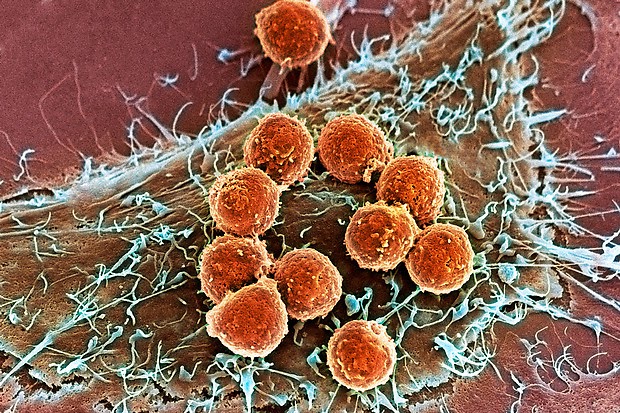
"Researchers at the National Cancer Institute sequenced the genome of her cancer and identified cells from her immune system that attacked a specific mutation in the malignant cells. Then they grew those immune cells in the laboratory and infused billions of them back into her bloodstream.

The tumors began “melting away,” said Dr. Steven A. Rosenberg, senior author of the article and chief of the surgery branch at the cancer institute."

Now the patient is not cured but her tumors are much smaller. She had an advanced and particularly deadly type of cancer in 2012 when she was approached to try this experiemental technique. Now just because it worked on one person, it does not mean its ready for prime time. But it does represent a new approach to cancer treatment. 

Wednesday, April 30, 2014

A trip down memory lane

Back in 1971-2, half of all cancer patients lived one year. Now, in the UK at least, half of all cancer 'sufferers' (how is that for a horrible term?) live for ten years. I would assume the rates are similar, or even better in the US. But even in digging around in the National Cancer Institute's website, I could find the data.

The actual quote is:

"The analysis showed that in 1971-2, 50% of people diagnosed with cancer died within a year. Now 50% survive for at least a decade - up from 24% in 1971-2.

But the findings, based on the outcomes for more than 7 million patients, also showed that for some cancers, survival rates were still very low.

For example, just 1% of pancreatic cancer patients and 5% of lung cancer patients can expect to survive for 10 years."

So there is good news and bad news mixed together. But it does show a huge improvement in cancer treatment and research.

The goal is to have it increase to 75% survival rate for ten years. Its not just treatment and research but also screening and earlier diagnosis which have come in to play.

So progress is good. It shows we how far we have come. But we also need to work on the vocabulary. Sufferers? Really?

Thursday, April 17, 2014

Blood test for breast cancer

I find this exciting news. A new blood test has been developed which can show if breast cancer has spread and if it is responding to treatment.

It seems silly in this day and age that we can only find out if breast cancer, and many other cancers, have spread by waiting for symptoms and looking for signs in imaging tests. We have to wait for it to show up and cause problems. Doesn't that sound archaic? Get some leeches too...

Medical advances have come a long way in recent years. An operating room resembles a space ship cockpit in some ways. There are robotics and little head sets and all sorts of things. But we still have to wait for symptoms of cancer....

Tuesday, January 28, 2014

Dear Medical Researchers

Dear Medical Researchers:

This is what I want from you, besides a cure for cancer.
  1. A medication with these side effects: weight loss, the ability to get 8 hours of consecutive sleep, and anti-depressant.
  2. A cure for the common cold. This should be easy after a cure for cancer.
  3. Medical tests that do not come with a 'pinch', a burning sensation, or being stuck with needles or any other 'ouchie'.
  4. A dictionary that instantly translates 'doctor-speak', either the mumbo jumbo of big words or the vagueness of a non-answer, into normal human English.
  5. Thrift - I want inexpensive treatments that will not line the pockets of pharmaceutical companies or others so that the term 'medical bankruptcy' will become obsolete.
That's not a very long list so it shouldn't be that difficult. 

Thank you.

A patient.

Thursday, January 2, 2014

Cancer Immunotherapy

That's a mouthful. But Science Magazine has named Cancer Immunotherapy as their breakthrough for the year. So what exactly is that?

"“Immunotherapy marks an entirely different way of treating cancer — by targeting the immune system, not the tumor itself,” Science said... Based on the idea that the immune system can be trained to attack tumors in the same way that it targets infectious agents, cancer immunotherapy exploits the ability to harness different types of immune cells circulating in the body."

Researchers have already made some progress with this way of thinking with both melanoma and leukemia. They have plans in the works for progress for lymphoma and prostate cancer with trials set to begin soon.

From the patient's point of view, I think a new way of looking at cancer and treating it is real progress, instead of more of the same.

Friday, November 15, 2013

Gimme the paint!

This may look like a slightly disgusting picture but its a picture of a tumor as it would be inside one's body with and without the new tumor paint.
The left shows a tumor image on an MRI. The right shows the bad stuff lit up with the toxin from the Israeli Deathstalker scorpion (I'm not making this up) and shows the bad stuff - the stuff the surgeon wants to cut out. The other colors represent the good stuff.

This works on brain, breast and other tumors. I find this incredibly cool. Now surgeons go in and look at MRI and other imaging and figure out which are the good cells and which contain the cancer cooties. They would guess and use their experience. But if they took a few too many brain cells, the patient may never be the same. This is also why surgeons have problems getting clean margins because they are doing some guess work.

I love this quote:

'"In a matter of 10 years, surgeons will look back and say, 'I can't believe we used to remove (tumors) by using our eyes and our fingers and our thumbs,' " Olson says.'

Read all about it here. I find this very exciting! I want that paint before any more cancer surgeries.

Sunday, April 14, 2013

I get so confused on all this progress business


I saw this video and thought 'wow this is great news, more progress in treating late stage breast cancer'. Then I started thinking, did I see a different article on this new drug before or is a new one that I hadn't seen before. I get so confused.

I do think this is progress but I don't know if its 'new to me' so to speak or if I did blog about it previously. Well, either way its a nice story and its nice to see progress. But further testing is needed, its only available in clinical trials, and more trials may be required so it is still months or  years away from being available.

Sunday, February 10, 2013

A cure for lymphedema


I  had heard about this a few years ago and was told that it was only in experimental stages and not yet ready for use regularly. However it seems enough time has passed so that it is now becoming a reality.

This is nice progress to see that something was too far off into the future to be a reality to end up being put into use.

Thursday, December 13, 2012

A New Tool for Thyroid Cancer Diagnosis

Thyroid cancer has the fastest growing rate of incidence in the US of any cancers. The standard procedure to diagnose thyroid cancer is the doctor presses on the patients throat and asks them to swallow - this is to feel for any nodules or lumps. Other symptoms may appear such as a swallowing problems, a sore throat or speaking problems.

 If a problem is suspected, the next usual step is an ultrasound to see if a determination can be made. 1/3 of all ultrasounds are inconclusive - meaning a determination can't be made to determine malignancy.

The next step is a thyroidectomy where the patient if benign will spend their life on synthetic thyroid hormone - which is not quite the real thing. The problem arises in that for those with inconclusive ultrasounds only 25% of them are diagnosed with cancer at their thryoidectomy. Or 75% have unneeded surgery.

But the new hero comes riding in in the form of a new gene test which has a 90% success rate for determining if thyroid cancer or not.


This means patients no longer have unneeded surgery which puts them into a life with out a thyroid which is  fairly significant issue. And it reduces costs for for the patient and the medical care.

Okay some good progress for cynical me.

Wednesday, October 10, 2012

Positive progress

While we get mired down in a pinkified world for the month, I would like to take a moment to remind people of the progress against breast cancer so far this year. While the article was written regarding progress for African American women, I think it shows progress for all races:

  1. 1. One treatment does not fit all. The study released this summer showing four separate classes of breast cancer, this shows more clearly why some races are affected differently than others.
  2. "D" Stands For Decreased Risk - A study published in the journal Breast Cancer Research in April revealed African-American women with the highest levels of vitamin D also had a specific variation in the vitamin D receptor that cut their breast cancer risk in half, compared to women without it. 
  3. Even Moderate Exercise Helps -In June, researchers at University of North Carolina in Chapel Hill found that women who exercise between 10 and 19 hours each week had a 30 percent lower risk of breast cancer. And there isn't a need to break a serious sweat either.  All levels of exercise intensity were linked with a decreased risk, the study authors said.
  4. Regular Screening Are Key To Closing Racial Gaps - According to a study published in Breast Cancer Research in August, mammograms may be the key to closing the breast cancer gap between black and white women. When study participants received regular breast screening, "there was no difference in the rate of how many of them presented in the disease's later stages," researchers found.
  5. Affordable Care Is Within Reach
    In a commemoration of Breast Cancer Awareness month Monday, President Obama and Health and Human Services Secretary Kathleen Sebelius credited the Affordable Care Act with bringing on "a new day for women's health and the fight against breast cancer."
    According to Sebelius, the healthcare law "means that women can get the potentially life-saving services they need to detect breast cancer before it spreads, without worrying how a copay would affect their family budget."
  6. Existing Treatments Work
    A September study by Washington University researchers suggests basal-like breast tumors, one of the deadliest forms of the disease that has been shown to disproportionately affect younger women and those who are African-American, have a similar genetic makeup to ovarian tumors and could potentially be treated with the same drugs. 
  7. Triple-Negative Treatments Are Closer
    The notoriously fatal triple-negative breast cancer (TNBC) may have met its match, according to researchers from Memorial Sloan-Kettering Cancer Center in New York who found that a form of the small pox virus can be used against TBNC.
    In the study released this week, researchers found that a certain form of smallpox vaccine was able to kill 90 percent of TBNC cells in four days of treatment. It also inhibited blood flow to the cancer stopping its spread.
    TNBC is found in about 15 out of every 100 cases and is more likely to occur in Hispanics and African Americans. 
Progress is progress. All races should be recognized in breast cancer research. Cancer is color blind so its progress needs to be as well.

I Started a New Blog

I started this blog when I was diagnosed with breast cancer in 2007. Blogging really helped me cope with my cancer and its treatment. Howe...