Showing posts with label doctors. Show all posts

Wednesday, February 14, 2018

Doctors As Patients

I think doctor's make the worst patients. A friend's father, she told me, was a doctor but ignored his own cancer symptoms and said he was fine until he wasn't. I have never met a doctor who rushed to be a patient....

But I think the best training for a doctor is to be a patient - particularly a patient of the disease or ailment they treat. This would provide so much more understanding for them.

Here is the story of a British breast cancer surgeon who was diagnosed with breast cancer in 2015 and finally returned to work in 2017. She never expected to face this diagnosis. I don't anyone ever does.

"Doctors face particular challenges when they become patients—challenges that they are rarely prepared for. It is hard to relinquish control and allow others to dictate the treatments that you yourself are used to doling out. It is crushing to know your own prognosis in the starkest terms—a 65 percent chance of surviving for 10 years, in O’Riordan’s case. It is awkward to see your own former patients while you’re being treated: To strike up a chat would break confidentiality."

I would like to disagree here. I don't think it would be awkward to see your own patients while in treatment. I would not expect my doctor to treat me as a patient if I run into them in the store or something. I just say hello as I would with any other person.

"And it is difficult to be cut off from the same supportive forums and networks that other patients use to share experiences and support; if you let slip that you’re a doctor, you become a source of information, rather than a comrade in illness."


I have had doctors and nurses in my support groups. No one in the support group expected them to be any more 'up' on new treatments or provide constant medical advice because that is not what they are there for. They have occasionally filled in on a specific question or answered a question along the lines of 'should I go to the ER for this'. But that's it. In a support group setting, we can't anyone there to provide medical advice. First because they are there for support and second because they have no knowledge of our medical records.

"How much, for example, should she share with her own patients? O’Riordan had blogged regularly about her cancer. She had even done a TEDx talk. But she practices medicine under her maiden name, so few people would make the connection between her online persona and her professional one. Ultimately, she decided to say nothing at first, revealing her experiences only to patients who have completed their treatments and are dealing with the side effects. It helps them, she says, to know that their doctor fully understands how hard it is to live with breast cancer. “You don’t want to compare yourself to other people,” she says. “But when they’re going through that journey, it helps to know that the doctor has, too.”"

I absolutely think she should have felt she could share her diagnosis if she wanted to her patients with the same diagnosis. My best therapist ever had had breast cancer ten or fifteen years before she started seeing me. Because she opened up about this, while we didn't discuss it often, I felt much more comfortable because she 'got me' through her own diagnosis.

I would be very happy if I knew more about some of my doctors. No, I don't want to know everything about them.  But if I knew they had been through what I was being treated for it would greatly increase my comfort level. (Why is doctor patient confidentiality only one way? That's a question for another day blog post.) This especially holds true for specialists in my opinion.

Think about it - if you knew your gall bladder surgeon had had the same surgery as he was treating you. Wouldn't your comfort level with him go up a few notches? He survived, so can you.

Finally, I would like to state that I do not think that this surgeon was ready to return to work. If her brain was compromised by chemotherapy to the point she could not remember instrument names, I would not want her operating on me. Part of healing after cancer, or other ailments, is getting back to the same physical and mental states.

"Chemotherapy can famously fog the brain for years after the treatments end, so she still finds it hard to concentrate for more than half a day. When she returned to the operating room, she performed all the old procedures flawlessly, but at one point, she forgot the names of her instruments. “I was closing the skin and needed forceps to hold the tissue, but I couldn’t remember what they were called,” she says. “I was doing the action with my hand, and thankfully, with a good scrub nurse, you don’t need to ask.”"

My opinion is that just because she is a doctor it doesn't mean she should give herself clearance to go back to work. She was not able to work independently and needed to lean on her support staff to that extent.

In addition I will go read her blog to learn more about her. She has completed a school of hard knocks.

Tuesday, November 21, 2017

What A Concept!

I met with a pharmacist yesterday or a pharmacologist. It was great. When I had my annual physical with my primary care doctor in September, she was concerned about my medications and interactions.

The pharmacologist went through my entire list of medications - prescription and OTC - and asked why I was taking each one. Then she went through and looked up possible interactions with them. She gave me some advice which I found very helpful.
  • Because I am on Prilosec for GERD from a sliding hiatal hernia, I need to take it in the morning, 30 minutes after my thyroid medication and then wait another 30 minutes before eating. I was taking it in the evening.
  • I also need to get off prednisone for my RA.I am on a low dose but its not a good idea to stay on it long.  I will stay on it until January when my hopeful new RA medication will kick in and then I can ditch it.
  • As my pain management doctor has already suggested, and I really want to do, is to reduce my Lyrica dosage or even get off it. My previous pain management doctor, if I said I had pain, he would say, 'let's increase your dose'. But he never gave me any information why or requested any scans or testing. This is why he is no longer my doctor. I meet with my pain management doctor next week. 
  • I also need to change my Calcium with D to calcium citrate not calcium carbonate - something I completely blank out on when in the store.
Also, I am only on about four medications for the side effects of other medications. We had to laugh at that. 

At the end of the appointment I felt very good. A knowledgeable neutral party had looked at my meds and found that I need to be on the meds I take. I need to be careful about some interactions and see if I develop any symptoms and cut down if needed. 

I feel like I should do this every five years or so. I feel that not all doctors look at what other medications I might be on before prescribing something new.  A good experience, for once.

Friday, October 20, 2017

Being A Bad Patient Vs. Being A Rude Patient

There is a vast difference from being a bad patient as opposed to being a rude patient. Yes I know often when we go to the doctor we are not feeling are best and are probably prone to over reactions and stress. But there is no reason to be rude.

So I was appalled when I read this article on the amount of the abuse faced by doctors. Medical doctors have studied for many years. They know what they are doing. They are professionals who are trained to take care of people. They are human beings, just like you or me. So there is no reason to be rude to them.

"A wide-ranging survey of more than 800 U.S. physicians, conducted by WebMDand Medscape in collaboration with STAT, found that 59 percent had heard offensive remarks about a personal characteristic in the past five years — chiefly about a doctor’s youthfulness, gender, race, or ethnicity. As a result, 47 percent had a patient request a different doctor, or ask to be referred to a clinician other than the one their physician selected.

Fourteen percent said they had experienced situations in which the patient complained, in writing, about the doctor’s personal characteristics.

African-American and Asian-American physicians were more likely to face such attacks, and female doctors were more often the victims of bias than males. But patients found targets in every imaginable corner: 12 percent of physicians, for instance, endured offensive remarks about their weight."

Does it really matter about a doctor's age, weight, gender, race or ethnicity when they are treating you? I do realize that some people prefer a male or female doctor for certain exams but there is no good reason to be rude to them about any of those demographics.

And certainly swearing or using derogatory or racist terms when referring to the doctors is just plain wrong. What does it matter what they weigh? I know all my doctors seem to be toothpicks, at that perfect BMI, and I feel fat next to them. 

When I first saw the title to this article,  I assume it was about the abuse nurses face on a daily basis - where they are hit, bit, pushed, shoved and more. This is another significant example about how a profession is being abused by the rest of us. 

A significant part of this issue is that many doctors have to resources to support them when faced by this kind of treatment from patients. What are they supposed to do, bite their tongue and keep treating them? Verbal abuse can leave emotional bruises where no one can see them but they still deserve help. And its just sad if hospitals need to provide resources to protect the people they hired to take care of others.

There is no room in the world for this kind of treatment. No one deserves this kind of treatment, especially someone who has studied for many years and wants to take care of people.

Sunday, August 27, 2017

Doctoring Between The Lines

I don't know about anyone else but I have a primary care and then an oncologist, breast surgeon, endocrinologist, rheumatologist, pain management, orthopedic surgeon, meds therapist, social worker therapist, dentist, and periodontist. They all have their own specialties and focuses on specific portions of my body. But I swear they like to color outside the lines.

Last week my rheumatologist started commenting on my regimen to control my acid reflux from my hiatal hernia. How does heart burn relate to my rheumatoid? And why did I need to explain it to her?

In the past six months my pain management doctor has been messing with some of my meds that were prescribed by my meds therapist for depression. There is some logic there because the same drugs are used to treat to nerve pain and depression but when one drug gets changed, then others need to be changed. And my meds therapist didn't like the most recent change my pain management doctor made and said she wouldn't prescribe that combination. This left me in the position of having to explain his most recent thinking.

My primary care once messaged my endocrinologist to question my thyroid levels which resulted in me getting a snotty letter from my endo a few weeks later and no changes. Thanks....

I don't mind if my doctors talk to each other about me. That's fine. But I don't want to be put in the middle. Please talk to each other and say we both like this change and take me out of the hot seat. Thanks.

Thursday, August 17, 2017

Breaking In A New Doctor

I was disappointed when my endocrinologist left for a new hospital. But I can understand that as the mother of two small children she needed a shorter commute to be able to achieve a good work/life balance. However, that meant I needed a new endocrinologist. I met him yesterday.

Before I met my endocrinologist after I had an appointment with my rheumatologist who is a nice woman in her late 50s/early 60s who has been a doctor for many years. In contrast my endocrinologist joined the hospital in early July after his residency. This means he is a kid, literally. I think I have clothes older than he is.

When I met him, my first sentence was "I have a complicated medical history". At least he had read parts of it but that lead to a big discussion about how I used to have an endocrinologist and then didn't and then finally did again which lead to evil ultrasounds that drove me crazy because they were supposed to be clean but weren't for a couple of years.

He didn't break down and cry when looking at my medical history. We made a deal. I will come back and see him in December after I get more thyroid blood work done. Then every six months I will have more blood work done and I will see him once a year. And I only will have another ultrasound if my thyroid levels go up which would signal a recurrence.

That was a good start. But I wish he would grow up a little bit.....

Monday, July 3, 2017

The Truth, The Whole Truth, Nothing But The Truth

The truth about cancer treatment is very complicated. The treatment options are very deep, strong, and harsh even. They are just drastic. Because they are so drastic, they can very well cause a lot of post treatment effects - i.e., side effects. The information on side effects is not a list, but a mountain.

Yes we want the truth. Oncologists I think waffle on how much information to provide to their patients about their treatment options when faced with their treatment options. I can tell you its a lot of information to take in and absorb - and probably  not everyone is ready for that. And our doctors are unsure how much information each patient can handle at that time.

Our oncologists can give us all sorts of great information - recurrence rates, risk reduction (what the heck is that?), side effects (only a few), and how you are going to be a better and newer more normal person after all. and then, after treatment, you start to feel crappy. You are not the same. You are tired. You might be depressed even. But why? Because you didn't get the whole truth before.

At each oncologist appointment, we leave the room with a brain overflowing with information and we try to grasp everything that we are told. We are probably clutching a few brochures covering our treatment and/or diagnosis.

Did we remember everything? Probably not. Because it was too much information all at once. Even if we bring a helper to make sure all our questions are asked and their answers are written down, we still may not have gotten it all.

But as patients, we need the truth, the whole truth, and nothing but the truth.

"Cancer treatment can be life-saving. It can also be life-changing—and not in that wonderful, fluffy, “positive thinking” way that extols the virtues of enduring hardship. Newly diagnosed patients need to be given the facts, fairly presented, so that they are not blindsided if, instead of getting better and better after their treatments, they slowly get worse and worse. This can be considered a fair trade-off for the chance to live longer…but, like the chance of getting lymphedema or a secondary cancer, it needs to be a risk you take with your eyes wide open."

Just tell us like it is please.

Wednesday, March 8, 2017

Why Bother?

For some reason I have had a similar conversation with different women on the same topic: why take tamoxifen or aromatase inhibitors after initial breast cancer treatment. Aromatase inhibitors are Arimidex (anastrozole), Aromasin (exemestane), and Femara (letrozole)

The conversations all boil down to:

  • What if I get side effects? They have heard they are awful and could cause them some real problems. But if you don't even try them how will you know if you will experience the side effects?
  • What exactly do they do? They don't really understand that they would reduce their recurrence risk by being on them
  • Why do I have to be on them so long? It used to be five years and now new research has come out to say ten years is better. And more research is going on that may lead to even longer treatment periods
[As I write this, there is a commercial on TV for Botox for migraines. Botox is botulism, which is a very nasty germ...]

I have had friends who do the same thing with their medications.They over think them and won't take them because they have heard that the side effects might be bad. Or the withdrawal from the drug could be bad. 

You won't know if you might get side effects if you don't try the medication. And you won't get the potential benefit from the medication if you don't take it. How is your doctor supposed to treat you if you won't even try their recommended medication?

Monday, February 6, 2017

The Difference With A Good Doctor

This morning I had a wonderful experience having injections in my spine around T8 and T9 where I have a couple of desiccated discs. (Apparently I did something to my back in the previous years - my money is on the time I knocked the wind out of myself in front of the upper ski lodge with a deck full of skiers.) Desiccated discs are common in older adults (70+). Once again I am proving I am less healthy than most people 20 years old than me.

Today my new pain management doctor did the procedure. He was nice and talked to me first. Then he asked me during the procedure if I could feel anything and he would add more pain meds. He asked me how I was doing. He told me if I felt pressure, he would add more pain meds. Afterwards he told me it would take a few days for I to feel any improvement. And he repeated his instructions to me about changing my other medication levels.

What a difference.

My old pain management doctor never asked how I was doing. He never offered to give me more pain meds while doing injections. He would shove in the pain meds and they would BURN! Then he would push in the steroids which would cause a lot of pressure in the area. And he never talked to me about anything else.

I am very impressed with my new pain management doctor. This really show the difference between a good doctor and a bad doctor.
  • A good doctor asks how you are doing during procedures
  • A good doctor talks to his patients to make sure they are doing okay.
  • A good doctor is concerned if his patient is uncomfortable.

When you find a good doctor, keep them.

Thursday, January 26, 2017

I See Potential

I finally met with my new pain management doctor. I liked him. He actually read my whole file (or at least the most recent relevant parts - the entire thing is probably close to the size of the complete Proust) before seeing me. Then he listened to what I had to say. Asked questions. Appreciated my seriousness - I was actually taking notes - and that I go to the gym. I think I am happy

He did tweak some medications but asked me what I thought about it instead of just saying 'up that dose' or 'here's more pills'. I am going to have injections in my back in a couple of weeks and follow up after that.

There is such a difference when a doctor listens to what you have to say, discusses things with you, and seems like he really wants to make you feel better. The moral here is find a new doctor if you don't like your current one.

Tuesday, January 3, 2017

That Sleep Crap

So I haven't slept well in years. Back in the 1990s and earlier, I started having sleep problems. I have been known to get up and clean the house in the middle of the night.(Why not. I was awake?) Its not like I wake up dying to pee or need a glass of water. I just wake up and can't sleep.

My husband tells me to relax and feel each body part slowly relaxing and then just close your eyes and fall asleep. I have tried everything you can think of, including and not limited to: exercise, sleeping pills, new bed, etc. I have even counted sheep.

Two years ago my doctor sent me for a sleep study that came back as no apnea or anything. This year she sent me for another one because of my fatigue issues. That one came back with apnea so I was sent for a CPAP study and I just got the results: It was only partially successful. This means I don't necessarily get a CPAP and I get a new doctor. I am being referred to a sleep disorders doctor.

Just what I need, another doctor. I can't wait. But if they can help me get a good night's sleep regularly I'm happy.

Thursday, December 22, 2016

Doctor Search


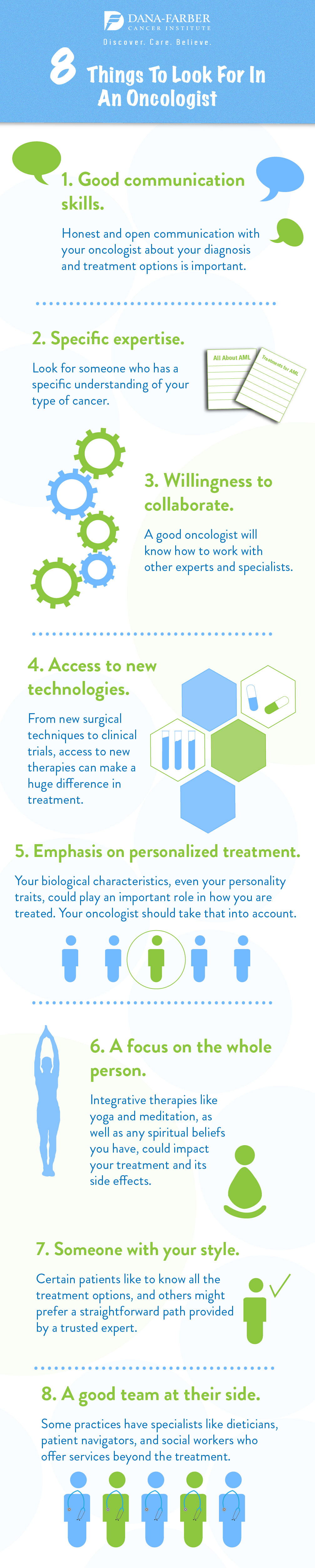
Dana Farber Cancer Institute just released this list of what to look for in an oncologist. I just think that they are things we should look for in all doctors.

I have ditched doctors who didn't have all these:
  • Communication - why have a doctor who doesn't talk to you.
  • Specific expertise - I wouldn't want a dermatologist to treat my rheumatoid arthritis but I would want them to remove funky looking moles. I would also want my oncologist to specialize in breast cancer.
  • Willingness to collaborate - this is exactly why I am getting a new pain management doctor: he won't let his patients talk to someone else and then go back to him - meaning no second opinions if you are his patient.
  • Access to new technologies - if my doctor is not using the newest technologies to treat me, I don't want them. I had a gastroenterologist in the mid 1980s. At that time he was the head of the department. I went back to him around 2009 and he was still writing paper notes, and only looking at his hand written notes. 
  • Emphasis on personalized treatment - I am not a number. I am an individual. I have a million (or so) ailments and I want a doctor to take all of those into account.
  • Focus on the whole person - please don't just treat my breast cancer but look at the rest of me and suggest things that will benefit my entire body and think about my emotions and mental state.
  • Someone with your style - actually, someone who will adapt to my style. I know how much information I want to hear and will ask you questions. I expect educated answers and references to where I can find additional information.
  • A good team on their side - its not just an individual doctor that treats you. You have to deal with everyone from the person who calls you to make an appointment to the nurse who checks your vitals when you get there and answers questions when the doctor isn't available in person. 
This is a good list to review and consider when looking at any doctor.

Wednesday, December 21, 2016

Women Doctors Are Better

It took a study but the truth is out, women doctors are better than men.

I have always preferred women doctors. I just assumed it was because my pediatrician was a woman. The first dentist I went to was a woman - I have these vague memories of going to see her in her Boston office and getting erasers shaped like animals afterwards. If I get a choice, I usually prefer a woman doctor. Currently I have women doctors for: primary care, oncologist, endocrinologist, dentist, periodontist, therapist, meds therapist, rheumatologist, eye doctor....

"People treated by a female had a 4 percent lower relative risk of dying and 5 percent lower relative risk of being admitted to the hospital again in the following month.

To explain the discrepancy, the researchers point to past studies that have shown female physicians are more likely to provide preventive care and psychosocial counseling. Female doctors are also more likely to adhere to clinical guidelines."

I think the biggest part of this is the level of compassion I receive from these medical professionals. 
I think women are more compassionate as a rule and this compassion is also less likely to come from male doctors. Preventive care and counseling are very important. Clinical guidelines may or may not be as perfect as the article goes on to add:

"...adherence to clinical guidelines “does not always equate with quality or value of care.”

But the point is there. 

Back in the old days, women were not allowed to be doctors. But the times have change, go find a woman doctor and get better care.

Saturday, December 17, 2016

Doctors Should Speak Clearly

I really dislike a lot of doctor speak. They say things like 'with your medical history we need to be sure' or 'that really needs more research before we can tell if it would be right for you'. Then they try to add explanations about things that include the words 'that's a possibility' or 'we could consider that'.

What exactly does the word 'consider' mean? I had never really thought about that until I read this blog post that was mentioned on Facebook and then I got really irritated. If a doctor says they will 'consider' a potential treatment protocol? Does that mean they want to go look something up about it or they want to prolong my agony? Why can't they just say there's a new option for you that looks pretty good.

I think doctors get trained so much (and have to keep potential malpractice suits in mind) that they hesitate to speak directly about anything. They feel the need to insert all the fine print you see in a print ad for a medication to cover all the potential side effects or 'adverse reactions' into their words. Can't they just drop the doctor speak and talk clearly to a patient.

Its just you and your doctor sitting in an exam room or their office, and they have to speak in circles so there is no chance you could ever sue them for anything. Its unfortunate that some people feel the need to sue too quickly and even more unfortunate that some doctors abuse their power and some patients suffer as a result. The rest of us patients pay the price for that in the resulting doctor speak.

I think if doctors spoke clearly to their patients and talked to us like a person instead of as a potential lawsuit? And if they didn't use the words like 'consider' or 'possibility', wouldn't we all be better off?

Thursday, November 17, 2016

Yes I Do Have Back Pain In The Middle of My Back

Yesterday I went back to my pain management nurse practitioner yesterday. I felt like it was pulling teeth to get her to admit that there might be an additional source of pain in the thoracic area if my spine (that's the middle part - lumbar is the lower part, cervical is the upper part including your neck).

She saw my x-rays which my rheumatologist pointed out to me as showing possible sources of pain. She didn't think they could be causing that much pain. She did push on my back to see if it hurt (how thoughtful of her). She nearly pushed me across the room as she pressed on my spine. Yes it hurt. A lot.

Finally she agreed to recommend that I have an MRI on my spine to see if anything had changed in nearly 8 years. Its about time.

I keep saying I get new areas of pain and pain management seems to want to prescribe medication to me and give me injections. They never seem to want to look at the areas that might be causing pain. Whenever I say there is new pain, I get these responses "its your fibromyalgia in that area", "its referred pain from this other pain", "there isn't pain in that area".

I think that there is new pain obviously and finally they are going to look at what is going on in my back. At first the nurse practitioner wanted me to come back and see her after the MRI, but then she said I should see the doctor himself and see if he can do trigger point injections there to resolve the pain.

So now I have the date for my MRI (after Thanksgiving), do I want to call my pain management doctor or do I want to try a different pain management doctor to look at the results? A dilemma for sure.

In the meantime, I am sitting down because my back is hurting a lot in the middle where I have been telling them about.

Sunday, October 2, 2016

I Have Learned

Unfortunately because of my health I have learned a lot about dealing with doctors and ailments. Its the one thing I can still do.

Someone I know has been dealing with a significant medical issue and now has gotten some more news which could impact the rest of his life permanently. As someone who has dealt with multiple medical issues I could relate to his concerns.

I shared what I would have done based on my experiences with ailments. I guess I have learned a lot in the past ten years or so of medical disasters. This is what I have learned:

Step one: education. Find out as much as you can about the body part with the problem. Research the crap out of it. I would start with any medical organization for doctors who deal with this problem. Then I would find out as much as I could about the ailment. And then the body part with the problem - what does it do, how does it work, and what is the impact of a not so good body part - can you live without it or if its damaged. What is the long term impact of it. Take the time to learn all you can about the changes in your health and how your body can deal with it.

Step two: ask questions. Write down all the questions you have and then get someone to go to the doctor appointments with you so you can the answers you need. Their job is to make sure you get all the information you want. This is always a good idea with a major medical issue. Keep learning, even attempt to stay up with the latest research.

Step three: options. Once you get the information so you have a better idea of what you are facing, maybe get a second opinion. Take your time and think about options. Digest what you have learned and figure out what you want to do. Don't assume the first doctor is correct.

I hate dealing with doctors and stuff. But I guess I have learned enough that I can share with others on what has worked with me. I just wish I was healthy.

Thursday, September 22, 2016

More Needles????

I hate needles. I really hate needles. If a needle is near me I can't look. If a needle is near anyone else, I leave the room. (Actually sewing needles and knitting needles are fine. Its those icky medical ones that cause me problems.)

Now it looks like more needles are in my future. Ick. Double ick!

Yesterday I went to see neurosurgery because of increasing pain in my neck. Real pain in my neck, not the literal kind. I do have to deal with the literal pains in the neck (like insurance companies, hospital billing departments, and poor bedside manners). Back in 2014, I was having problems with my right arm. I was sent to see a neurologist to see if there was something going on back in my brain to cause this. (A subtle way to see if there was a 'thingy' in my brain.)  There wasn't anything in my brain (except my brain) but there were disc protrusions and bone spurs on my neck.

Jump ahead 2.5 years later and I have increasing pain in my neck, shoulder, and arm. My primary care referred me back to neurosurgery. The neurosurgery physician's assistant said the following:

  • Your body may reabsorb disc tissue but will not reabsorb bone so its not going away anytime soon, probably not ever.
  • Physical therapy may help so we are going to try that.
  • They want a new MRI of my neck (and brain) to get another picture of what's going on and see if there are any changes (read that as growth).
  • The next step is needles in my neck sort of like what I get in my spine.
I am overjoyed. I can't wait. But I guess I have to realize that I can force myself to deal with needles if it means the pain might go away lessen. That is my dream actually for a pain free, healthy body. So I guess I have to stick with needles (that is such a bad pun I have to leave it even though its not what I meant to say. What I meant is I have to cope with needles.).

Wednesday, September 14, 2016

Sleep, Glorious Sleep

So in recent months I have developed the ability to take two hour naps and then get a full night's sleep. I just thought it was just because I need more sleep because some nights I get lots of quality insomnia. But no. My doctor doesn't agree.

No, no, no, no.She is concerned that I get so tired that there might be something going on when I sleep (like snoring) and that my blood oxygen (not blood alcohol - which I often say instead of oxygen for some reason) level has been running lower and lower over the years. So I get to have a sleep test again.

I just had one two years ago. I don't sleep well during a sleep test. I hate the idea of being watched and monitored while I sleep. I sleep best when in a bed with my husband and my two cats. (Maybe I can bring them with me?)

Anyway, grr, grr, grr. But if it makes me end up healthier (but not with a CPAP machine) I will be happy. The idea of a CPAP machine drives me crazy. I am not sure I could sleep with one.

Thursday, July 21, 2016

What Do You Do When You Don't Feel Well?

I guess on the short term when I don't feel well I stay in bed or on the couch. I sit around doing a lot of nothing. And eat and drink what I want. Or what I feel will make me feel better...

If I don't feel better I call my doctor eventually... If I think its that important. I hate calling the doctor. I will not go to the ER unless I am (literally) dripping blood.

I often pretend I am feeling well when I may not be. Because if I didn't do that I would spend entirely too much time sitting around.

But today I am not feeling that bad. Even though I painted part of the living room yesterday. I mean I am tired and soon I will get my act together and take a shower and get dressed. I have nothing on my calendar until 1 pm today. So I can be lazy for a bit.

However, one cat is not feeling well. I am not sure what to do because he can't tell me what is wrong. He clearly is not feeling well because he isn't walking much, he's moping, he's not eating, he's not drinking much, and he's just sitting.

He went out Tuesday night (to my displeasure). He did not appear until yesterday late afternoon. He came out and walked around a little bit and went back to sleep near the foundation of the house. I went inside and made him a quiet little space with his food dish, water bowl, litter box, and favorite pillows. Under protest, I brought him in and put him in there. He immediately jumped up on the table so I put his pillows there. He stayed there for a few hours and used his litter box. Then he came back out to the living room and slept on the sofa for a while.

This morning he was sleeping downstairs on the futon. I brought him some water which he didn't appreciate. He did come upstairs to eat a little and then has been sleeping again. He doesn't want attention. He protests when I pat him. He insisted on going back out - I hoped he was going to be a bit more energetic but he's not. He sitting back by the foundation again.

Damn. I think he needs to go to the vet. But at least its not me going to the doctor. He clearly is not feeling well.

Friday, June 24, 2016

After A Lot of Deep Thought

As a professional patient, I have met with a few million doctors over the years. I have recently done a lot of deep thought recently as well. I have decided I am glad I never even considered being a doctor.

Never mind the ick factor of having to touch people you don't know and look at all sorts of mystery ailments and figure out what is wrong with them. There also is the issue of medical school and internship - way more education than I would ever want. Besides I deserve all the sleep I can get.

On the plus side of being a doctor would be the ability to find a cure for all my ailments. That would be really nice. Actually it would be phenomenal!

But I digress. Another part of being a doctor is that everyone wants to tell you how to do your job. You would think you have enough education to make your own decisions but no. Medical school might train you on how many bones are in the human body, what the spleen actually does, or what your blood count numbers actually mean with having to look it up.

But according to the rest of the world, it doesn't give you a good bedside manner or how to manage a medical practice or deal with insurance companies. And every patient you see presents symptoms (and attitudes) differently. All their family members want to give you their opinions. Never mind the people that want to sue you if you make the least mistake.

So my ultimate conclusion is that, while I am sure I could be the first to come up with a cure for cancer if I was a doctor, I'll pass. I just want my next doctor to be the one to find a cure for all the horrible diseases of the world and cure me.

Monday, May 23, 2016

Disappointment

I just got back from the knee doctor. (I think I almost have a doctor for each body part these days.) What a disappointment that was.

So I met with my knee doctor and another knee doctor he brought in to consult. My first knee doctor, Dr. L, has been great. He has been talking to me about not having my ACL repaired because he was concerned it would never heal right and would always be stiff. So he wanted me to see Dr. B to get another opinion on this.

Dr B gave me his thoughts. First of all, he reiterated what Dr L had told me - no guarantee it would ever heal right. And he also said there is no guarantee my knee would be any less painful after the surgery.

So the best option for me is to wait until my knee is really bad and I get older and then have a knee replacement. I need to be older so I don't live longer than the replacement knee parts (because if you replace it a second time, it never works very well). And if they do the ACL repair now, it would make the knee replacement more difficult and riskier that it would not do as well.

In the interim, I got a cortisone shot in my knee to see if that helps. I can go back and get more cortisone shots if it acts up. (Did I say I hate needles?) And if it starts collapsing on me (when I am walking on a nice flat surface), I should go back and see him. And continue the PT exercises for eternity. Also, wear a knee brace as needed. (Knee braces on the beach cause tan lines.)

So I am disappointed. I was hoping for the magic silver bullet that will cure all my ailments, including my knee. Damn.

I Started a New Blog

I started this blog when I was diagnosed with breast cancer in 2007. Blogging really helped me cope with my cancer and its treatment. Howe...